Lion/Lamb

The last time there was a big gap between posts here, I used the excuse of it being due to the Big Life Change of getting married. This time, another Big Life Change: I have a new son. There’s a lot I can say about this startling fact, but this is a blog that’s primarily writing-related so I’ll stubbornly keep it that way. If you want super adorable babyphotos you can just email me. Oh, I will say that his middle name “Ilya” is partly inspired by the wonderful young poet Ilya Kaminsky (We wanted a Russian name to represent his mother’s part-Russian heritage).

Somehow finding time to write and edit. Not as much as I want, but knowing that I have much less time, makes me a bit more focused. And sometimes the task of holding a sleeping baby in your arms is a fine time to read complicated essays on poetics and listen to podcasts. I will post links to favourites in upcoming entries.

*

Meanwhile, it’s great to see a local poet I admire having his first book out soon. Daniel Zomparelli, the energy behind Poetry is Dead magazine, and vital life force in Vancouver’s poetry community will be launching his debut collection “Davie Street Translations” (Talon Books) this Sunday April 1st at the Cobalt. In the few readings by Daniel I’ve heard, the poems are powerful, playful, and unabashedly local. I’m sure that very soon after it being out, the book will seem like it was always a part of the make up of this city, or at least, the famous street that it positions itself in.

This is what poet Nikki Reimer had to say about it:

“These poems pay respectful albeit cheeky homage to a host of queer writers and queer icons in Vancouver, in the process redefining the possibilities for what it might mean to write young, queer, pop culture/literate, smart and alive on these crowded rain-sodden streets. Here glosas, palindromes, alphabet, palimpsest, concrete graffiti poems, pop music anthems and erasure abut a ragged lyricism, hell bent on obliterating every last stereotype and polymer partition.” – Nikki Reimer

Read a great interview with Daniel Zomparelli over at Rob Taylor’s blog.

The World of 10,000 Things

Reading tonight at the monthly Spoken Ink Series in Burnaby. They are allowing me a good chunk of time, which makes me more inclined to throw in at least one “cover” poem. I decided yesterday that I will read a Dean Young poem, one of my favorite poets of the playful “associative” (yet still emotionally generous) school of poetry. Looking him up online today, I came across a feature on NPR which was a great listen, and includes Young reading some of his poems.  At that time he was still recovering from a successful heart transplant for his failing heart and talks about that too, and facing mortality in poems, in general.

“I think that’s one of the jobs of poets: They stare at their own death and through it they still see the world — the world of 10,000 things. Poetry is about time running out, to some extent. You can think of that purely formally — the line ends, the stanza ends and the poem itself ends. And I think one of the things that’s pleasurable about reading poetry rather than hearing it, is that you immediately know where the poem is going to end. You can see it, just glancing at it. And there’s something maybe reassuring about that.”

Listen and read the feature and poems here.

I only have one collection of poems by Young, “Elegy for a Toy Piano” and a fantastic essay/book “The Art of Recklessness” on writing poetry but I’m looking forward to his newer stuff. There’s one poem written post-surgery that’s featured at the NPR link and it’s clear from that that nothing has been lost of his sense of wonder and startling humour and emotion.

Ok, enough procrastination, back to warming up for the reading tonight. I’ll leave you with a bonus link: Dean Young’s letter to a young poet (his nephew), which as is profoundly moving and insightful as anything in that Rilke book.


Matthew Zapruder on the Scottish Poetry Library podcast

“I think people have this misconception about poets that we sit down and figure out everything we’re going to say before we say it and then, because we have this “Great Command Of Words,” we can force language into saying whatever it is we want to say … but that’s not how most poets work. They have an instinct for language, they study language, they live with it, they feel it, they are attentive to it, so that when something comes up that seems resonant or has potentiality, poets will be able to activate those words, and make things more resonant. That’s what I think it’s all about. Not getting some message across. I mean, what’s the message? It’s scary to be alive? We’re mortal? We live in vulnerable bodies? Death is terrifying? Love is good? Don’t be cruel? Don’t take other people stuff? I mean, we’re not moralists, we’re trying to work with our materials.”

Matthew Zapruder

Listen to the whole podcast here, in which Zapruder reads a few of his poems and discusses poetry, including his poem on occupywriters.com

The Light the Dead See

Was kindly invited to read at the recently resurrected Dead Poets Reading Series, and I was honored to be reading with some fine and more established poets who are alive at the same time as me: Christopher Levenson (reading Arthur Hugh Clough), Sonnet L’Abbé (reading Ronald Johnson), Fiona Tinwei Lam (reading Muriel Rukeyser), and Russell Thornton (reading César Vallejo).

I introduced the Arkansas poet, Frank Stanford, who was introduced to me in my early twenties, through an lj online community (hey thanks Russel Swensen).  No one had heard of Stanford at the reading (other than my wife) which made me feel good about bringing his work to the attention of a bunch of new people. Here is one of the poems I read.

Hidden Water
Frank Stanford
A girl was in a wheelchair on her porch
And wasps were swarming in the cornice

She had just washed her hair
When she took it down she combed it

She could see
Just like I could

The one star under the rafter
Quivering like a knife in the creek

She was thin
And she made me think

Of music singing to itself
Like someone putting a dulcimer in a case

And walking off with a stranger
To lie down and drink in the dark

.

For those interested in looking into more about Stanford, I’d start with the well put together Wiki and this great essay by Ben Ehrenreich called “The Long Goodbye.” Most of his books are hard to find, but copies of “The Light the Dead See” and the sprawling epic “The Battlefield Where The Moon Says I Love You” are still available here and there.

Thanks to co-organizer, Rob Taylor, for inviting me to read and for Project Space for hosting the reading.

Here’s another photo of me gesturing too wildly with my arms (it’s not my evangelical preacher routine, it just happens when I’m nervous)

Poetic Justice Reading

As much as it is weird and uncomfortable to see video of myself, (and sharing it for that matter) it keeps me learning what I need to improve in my readings. I’ve often make a point to mute any theatric gestures or whatnot – but seeing how easy it is to get bored with watching a fellow reading from a paper on a stage, I would like to try amping it up just a little. While somehow still being my usual un-amped self.

Thanks to Candice James for inviting me out to read! I felt warmly welcomed and appreciated despite the low turn out.

Thanks as well as my “New West Peeps” for coming out to see me, especially my cousin Monisha who had us over for drinks and snacks after.

Poetic Justice happens every Sunday 3-5pm in the cosy backroom of the Heritage Grill in New Westminster, with 2 or 3 featured readers plus an open mic.

Word on the Street

I got the chance to do some writing “mini-consults” at Vancouver’s somewhat weather-damaged Word on the Street Festival today. At first sad that I would only be doing two, I ended up doing five, due to some late signing up / clerical confusion. The writers I got to talk with were great; so varied in style, it really gave me a workout in terms of attentive listening/reading and providing useful feedback. 3 of the 5 I did were ‘cold readings’  i.e. I didn’t get anything to read in advance. Super fun. I don’t know how well I did, but I was impressed by the writers and their ability to share their work with a complete stranger, let alone a moustached poet.

After that, trying to escape the rain, sat myself down with some hot tea in the poetry bus. Caught my boy Rob Taylor breaking hearts in his usual style, and Garry Thomas Morse who delivered an awesome maniacal performance.

Among the many booths, came across this cool thing that’s been started up called The Writers’ Room a literary program that provides one-on-one tutoring for at-risk kids, in a similar vein to what goes on at Dave Egger’s famous 826 Valencia  (but without the pirate shop.) They’re looking for volunteers and I am very much considering being a part of that. I’ve totally missed working with kids since the art class drop-ins I used to do a long long time ago, and have wanted to do some volunteering that means something to me. We’ll see how that goes.

And then, very much like a surprise dessert at the end of a good meal, I came home to find that two of my poems have been accepted into the  poetry friendly Contemporary Verse 2 magazine for their upcoming animism-themed issue. Nice. Thanks CV2!

Low at Rio Theatre

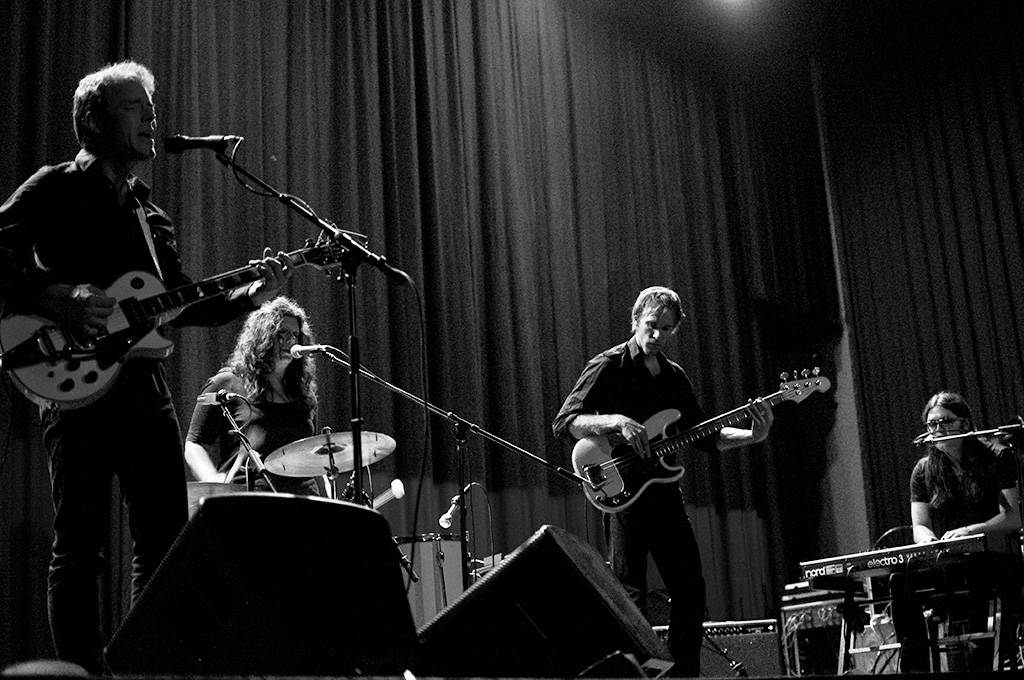
Oh boy, it’s been a while since this window has been opened. I guess I could blame big events in my life (I got married in August) but really that shouldn’t be an excuse. I’ll be kick -starting this up again. For now, a little review I did for one of my favorite bands.

Ashley Tanasiychuk photo

Low at the Rio, September 15th 2011

For Low fans, and those interested in getting an intimate introduction to the band,a slightly abridged version of the fantastic documentary “You May Need a Murderer” is available for viewing on YouTube.

They Will Take My Island

Came across this cool blog by Paul Vermeersch, where he has invited a number of poets to respond to a work of art by Armenian-born painter Arshile Gorky called “They Will Take My Island.”  Each poem on the blog shares that same title and takes off from there in a kind of group ekphrasis (a dramatic or poetic description of a visual artwork.) I like that he chose a piece which is fairly abstract, offering a wide possibility of interpretation, but the evocative title has enough charge to bring out some great poems.

Here is the original poem by Vermeersch and below is another by Adam Sol. I met Adam in Toronto and just got his Jeremiah, Ohio in the mail and am super excited about it.

They Will Take My Island

by Adam Sol

You taught me language, and my profit on’t
            Is I know how to curse.

They will take my island
if I don’t scorch it to the bones, though
to speak truly,

I did not know it was an island
until they said so.
I thought it was the world.

The river-fish would drift
into my clasp and I would gnaw
on their flesh while the gills still

gasped.  It had edges and pleasures
and dangers.
What more is a world?

(Read the full poem here)

Gillian Welch’s April the 14th

A while ago, a writing group I am part of, gave ourselves the assignment of making a mix-cd of “writerly” songs. I included in my mix, this song by Gillian Welch and David Rawlings, two of my favorite songwriters.  I wrote a bit about what I found interesting about the song.  I’m seeing her tonight at the Vancouver Folk Festival so I thought I’d share what I had written.

lyrics here
What could be a sad little song about wandering around a city and catching an Idaho punk band play some small fruitless show, is lifted into a much larger and deeper context by what frames it. On April the 14th, 1865, Abraham Lincoln (The Great Emancipator) was assassinated. On that same date in 1912, the Titanic struck an iceberg. And in 1935 (April 14th again) one of the worst dust bowl storms (Black Sunday) ever sent residents (“Okies” from Oklahoma) fleeing for other areas. It’s hard to see how these events relate to this  story about seeing a punk show, other than it possibly occurring on that same date too. There are other connections I can make…but that it would just be my personal connections; the song generously allows a lot of space for that.

Gillian places herself very much in an old-timey folk tradition and makes the most of it within her lyrics by referencing the work of older musicians and historical events from different times. As well, many phrases connect to other songs on the album: “the staggers and the jags” appears in the album’s sprawling closer “I Dream A Highway”, and “I wish I played in a rock n’ roll band”  are from “I Want to Sing that Rock N’ Roll.” I love that idea of stitching songs on a album together this way and wish more songwriters did it.

Other trivia: Casey Jones was a train driver who famously saved the lives of many passengers by remaining on his train as it crashed in order to slow it down, thus killing himself. He has been referenced in plenty of songs. The line “God Moves on the Water” comes from the old song by Blind Willie Johnson, which is about the Titanic.